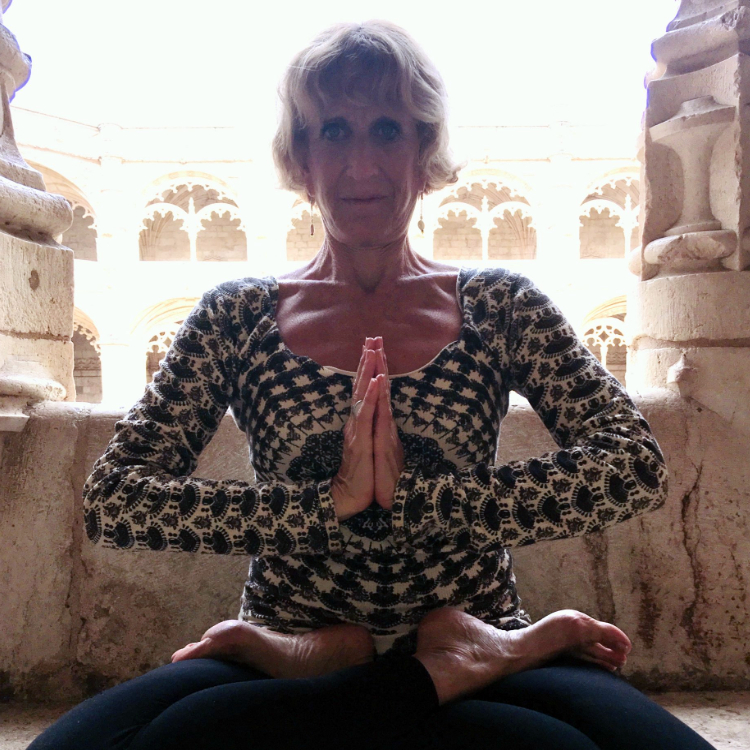
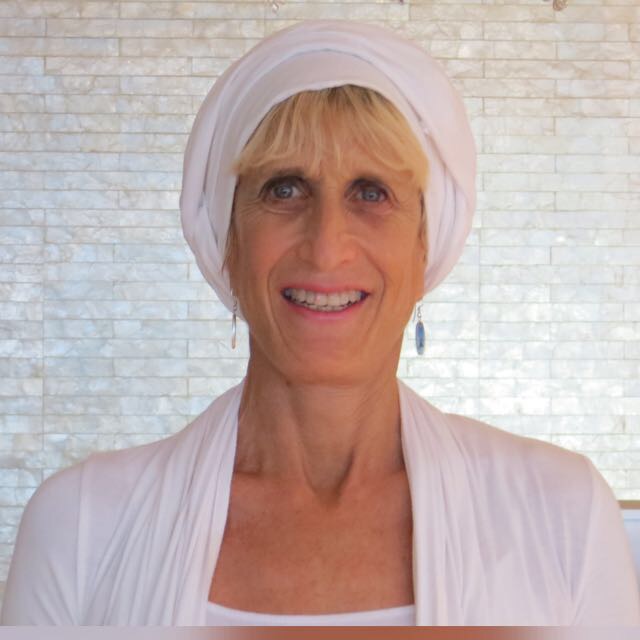
Visionary artiste, environmental pioneer, co-founder of Ekotecture. Jill’s life work unites art, consciousness, spirituality, and self-sustainable living. Each piece is a doorway into beauty.
Not as fantasy. Not as escape. As instruction.
Luxe, calme et volupté — this is the world Jill paints into existence. Vibrant oil on canvas. Vibrant oil on linen. Mixed media. Gouache. Handmade paper pulp. Plein air. Each painting a vision made visible.
Every colour is a building material. Every dolphin is a blueprint.
Jill’s art is classically trained — Europe, the Boston Ballet, the Boston Symphony, the Villa Montalvo in Saratoga, California (1981 grant), the Oberoi New Delhi (1992), the Rugg Road Paper Making Studio — and entirely her own.
She was invited to paint in the orchid greenhouses of Walter Hunniwell. In 1988, she rose at four in the morning in Nepal and India to capture the first light. She painted Italy on its own terms — Spoleto, Cortona, Venice, Florence. She painted Palm Beach as it actually appears: not the postcard, but the place.
Her subjects: dolphins, the ocean, gardens in cosmos, palm beach interiors, Italian streets, the Peaceable Kingdom, the spiritual everyday. Her tools: oil, linen, canvas, gouache, pulp, paper, brush. All surfaces are fair game.
The work has been collected privately, exhibited internationally, and given to those who can read it. She has refused to repeat herself.
Her sister’s living room in Boston. The lineage of Swami Vishnu-devananda — undiluted, as it was given to her, as she passes it on still.
Sixty-five years on the mat. The practice has never stopped. It is not a discipline she takes up for an hour a day — it is the structure underneath everything else: the painting, the architecture, the way she walks into a room, the way she listens, the way she waits.
She has taught the practice to rock stars. To an astronaut who walked on the Moon. To heads of corporations. To royalty. To children across the spectrum of ability. But mostly to regular folks. The lineage is the lineage. The practice is the practice. It does not bend to the resume of the student.
Yoga is the architecture of the body. Ekotecture is the architecture of the dwelling. Painting is the architecture of the spirit. They are the same inquiry held in three hands.
In 1992, Jill and her husband Lee Porter Butler — the environmental architect, inventor of the gravity geo-thermal envelope, faculty at UC Berkeley’s Graduate School of Design and Planning — brought Ekotecture into the world.
Lee was the architect. Jill was the painter, the partner, the yogini, the eye that kept Lee’s technical work tethered to beauty and to the body. Their work was case-studied by Brookhaven National Laboratory and the US Department of Energy. The Ekose’a Home was on the covers of Popular Science, Better Homes & Gardens, Mother Jones, Shelter. Press coverage in 1978–1981 alone exceeded sixty-five million pages.
Lee passed on November 22, 2005. The vision did not depart with him.
For twenty years Jill has carried the philosophy — through her painting, through her teaching, through the canvases that quietly encode the same principles Lee built into his architecture. She has been called “the Mother of the environmental architecture movement.” Lee’s archives now sit at the North Carolina State University Libraries. The work continues.
Lee left on November 22, 2005. The vision did not depart with him. I carry it forward — and I carry it as a duty, not as a consolation.
— Jill Karlin ButlerWhether you are a collector, a journalist, a builder, a fellow yogini, a developer who believes in what Lee built, or someone who simply heard the dolphins singing — reach out.
The studio answers.